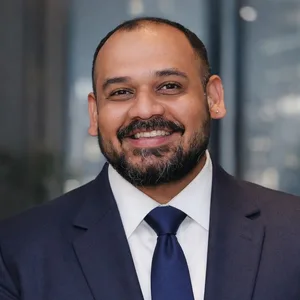

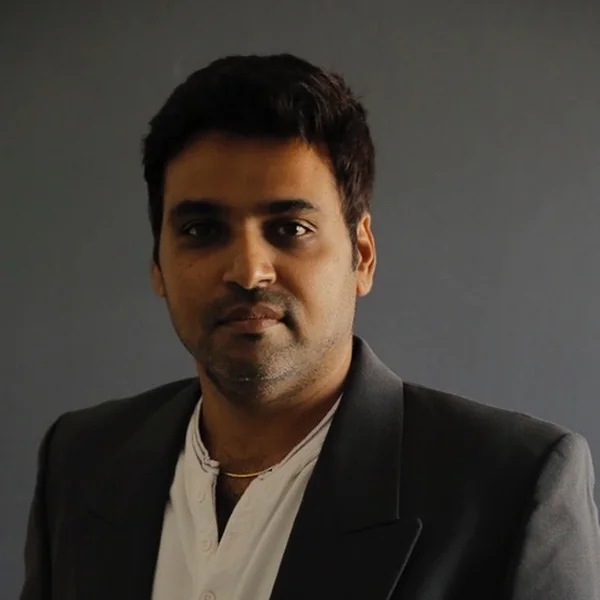
Sidambara Raja
Co-Founder, Pulsebay
“I've always believed the most interesting opportunities lie in what hasn't been built yet.”
I've always been drawn to ideas that challenge the way things are done. Pulsebay is my third entrepreneurial venture, and in many ways it brings together everything I learned from the first two.
Learning to build. Learning to experiment.
The first two ventures taught me different lessons about building businesses. Those experiences eventually shaped the idea behind Pulsebay.
IT services
My first venture was an IT services company. What started as a business opportunity grew into an organisation generating approximately $15 million in annual revenue. It taught me what it takes to build a business from the ground up: developing teams, establishing technology capabilities, earning customer trust and scaling operations to serve enterprise clients.
A platform for the music industry
My second venture took me into a completely different world. During the early wave of India's startup ecosystem, around 2015, I built a platform for the music industry. We raised venture capital and experienced the challenges and possibilities of building a technology startup in a fast-changing market.
Pulsebay
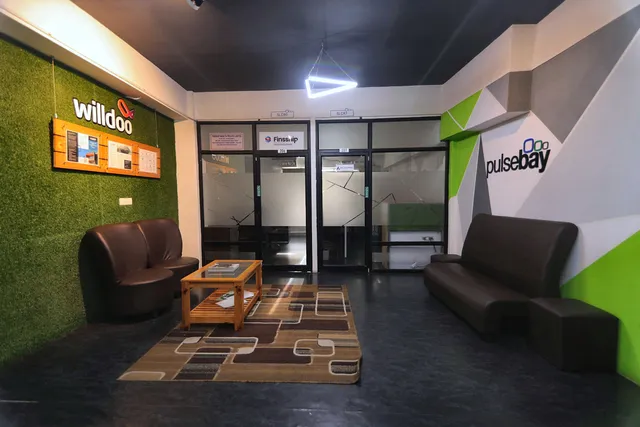
Rethinking where corporate work happens, by connecting businesses with talent and professionally managed workplaces beyond the metros.
One venture taught me how to scale a business. The other taught me how to recognise emerging opportunities and build something new around them.
The pandemic changed the way I looked at work
When the pandemic transformed the corporate world, I started thinking about a question that seemed increasingly relevant.
If companies could operate remotely, why did their workforce and infrastructure still need to be concentrated in metropolitan cities?
Businesses were discovering that teams could work from different locations. At the same time, companies were becoming more conscious of the cost and commitment of maintaining large office infrastructure.
I began exploring an idea: what if corporate operations could be extended into Tier 2 and Tier 3 cities, where businesses could operate more efficiently while reaching a wider talent pool?
An experiment that became a business
I joined hands with Sankar to explore this idea. One advantage we had came from my earlier entrepreneurial journey: the IT infrastructure and operational capabilities we had already built for our IT services business.
Instead of starting entirely from scratch, we used that foundation to experiment with the distributed workplace model. We tested the concept, explored the operational challenges and gradually understood what businesses needed to make this model work.
As the first experiments proved successful, we realised we had something bigger than a conventional coworking business: the foundation of a different workplace infrastructure model for India.
Start with a question
Could corporate operations extend beyond metropolitan cities?
Experiment with what we knew
Use existing technology and operating capabilities to test the model.
Build with patience
Validate the model, understand the economics and expand carefully.
One location at a time
We understood something important early on: this was a capital-intensive business. We didn't want to expand just for the sake of adding locations.
We wanted to build a sustainable business model, understand the economics and grow at a pace that made sense.
Over the last five years, we have steadily developed Pulsebay into an operating business with five locations in Pondicherry. That journey has involved learning, adapting, improving how we operate, and proving that our model works in practice.
There is much more to build
I see Pulsebay as more than my third venture. It brings together my experience of building technology businesses, experimenting with new business models and recognising the opportunities that changing markets create.
There is immense talent in India's smaller cities. People shouldn't have to leave the places they call home to work in a professional environment. Businesses shouldn't have to carry the burden of traditional infrastructure investment to reach that talent.
I want Pulsebay to help bridge that gap. We started in Pondicherry, and I see enormous potential across India's Tier 2 and Tier 3 cities. For me, this is still an entrepreneurial journey in progress.
Sidambara Raja, Co-Founder